



Beata Anderson
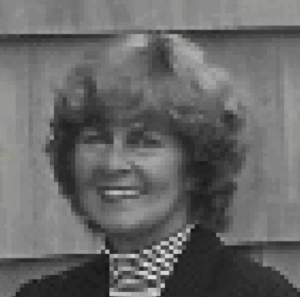
1987
Beata “Bea” Anderson’s stellar athletic career spanned from 1968 to 1979, a decade during which she became one of the most accomplished and respected female wheelchair athletes in the nation. Her competitive success was remarkable: Bea was named Outstanding Female Athlete seven times at either the New England Wheelchair Games or the Bay State Wheelchair Games.
Across regional competitions, primarily in New England and Massachusetts, Bea earned an astounding 140 gold medals, 20 silver medals, and 1 bronze medal. She was selected to nine international teams, competing in two Paralympic Games, three Stoke Mandeville Games, three Pan American Games, and one World Championship. In international competition, Bea achieved eleven gold, ten silver, and fourteen bronze medals, along with setting a world record.
Bea’s achievements extended beyond international competition. Nationally, she earned twenty-seven medals and established five national records in archery, field events, and pentathlon, and she was the table tennis champion in her class for seven consecutive years.
Yet Bea’s impact was not limited to her athletic accomplishments. She was deeply committed to advancing opportunities for people with disabilities and giving back to the community that had supported her. She organized and served as president of the Worcester Wheelers Bowling League, and was a long-time member of the Massachusetts Governor’s Committee on Recreation and Sport for the Disabled during the early 1970s.
In the mid-1970s, Bea founded the Massachusetts Minutemen Wheelchair Sports Team, expanding access to adaptive competition throughout the region. She also dedicated twelve years of service to the Massachusetts Easter Seal Camping and Recreation Committee, and spent seven years on the board of the New England Wheelchair Athletic Association, serving as treasurer and secretary during that time.
Bea was instrumental in creating the Boston Rotary’s Edward J. Powers Award, which recognizes the outstanding male and female athletes at the New England Wheelchair Games—a legacy of recognition that continues to this day.
Through her excellence as an athlete and her tireless leadership as an organizer and advocate, Beata “Bea” Anderson profoundly shaped the growth of wheelchair sports in New England and beyond. She not only won medals, but also built a movement, inspiring generations of athletes to follow in her path.