



Carlos Rodriguez
Competition | 2008
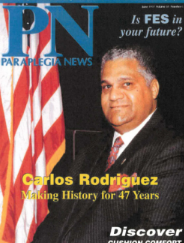
Hometown: Brooklyn, New York
ChatGPT said:Born in Brooklyn, New York, Carlos joined the U.S. Army in 1947. On September 27, 1950, he was wounded by mortar and machine gun fire during combat at Inchon, Republic of South Korea. He had been in Korea for just two months. Rehabilitation took place at Valley Forge Army Hospital in Pennsylvania, where Carlos was recruited for membership in Paralyzed Veterans of America (PVA) that same year. So began a sixty-two-year association with the PVA organization—one that would help make PVA history.
Carlos became deeply involved in the PVA chapter’s sports program. He played for the Brooklyn Whirlaways wheelchair basketball team for twenty years and reportedly tried nearly every other sport the chapter offered, including competing internationally in weightlifting at the Parapan American Games in the early 1960s and at the Stoke Mandeville Games in England. Carlos also served as the Eastern PVA chapter’s sports coordinator, as well as vice president on both chapter and national levels.
Rising quickly through PVA’s ranks, Carlos became national president when elected by acclamation in 1970. He once remarked, “It has been said, ‘There is not a job in the world that cannot be done better than it is being done. A man is not doing the best he can for the company that employs him, the people he serves, or for the world if he goes through life without looking for that better way.’ I subscribe to this philosophy.”
A member of the PVA Executive Committee for ten years, Carlos received the PVA Speedy Award (Member), the organization’s highest honor, in 1978. While promoting issues concerning paralyzed veterans, he met with U.S. presidents, popes, senators, and generals.
Carlos was also a member of the Korean War Veterans Memorial Advisory Board, which President Ronald Reagan created in 1986 when Congress passed legislation authorizing the memorial as a tribute to the more than 55,000 Americans who died in the conflict. Board members were chosen from 4.5 million Korean War veterans across the nation.
The group worked on the memorial for eight years. Members had the daunting task of recommending a site, choosing a design from 500 possibilities, raising more than $18 million, and promoting the memorial and its dedication in July 1995. The monument now stands in Washington, D.C., across from the Vietnam Veterans Memorial and near the Lincoln Memorial.
“This memorial is final recognition of the job my buddies and other Korean War vets have done over there,” Carlos said. No one played a more pivotal role in creating the Korean War Memorial or in working to improve the lives of wounded veterans than Carlos Rodriguez.


