



Stanley Myers, MD
Contributor | 1980
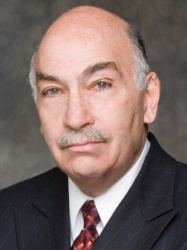
Hometown: Brooklyn, New York
After completing military service in 1967, Dr. Myers returned to New York City to enroll in a medical residency program in the Department of Rehabilitation Medicine at Columbia University Medical Center. Several of the senior attending physicians there were involved in the classification of wheelchair athletes and were anxious to have the young Dr. Myers take over those responsibilities.
In 1968, Dr. Myers began classifying athletes at the Tri State Games on Long Island and the National Wheelchair Games at Bulova Field in Woodside Queens. After 1973, the NWG began rotating around the country and Dr. Myers followed the NWG to those locations. The classification of wheelchair athletes was primarily based on level of spinal injury which was relatively easy if a competitor had a definitive injury. However, classification became more complicated as more competitors with Cerebral Palsy or Polio became involved. It was often necessary to classify athletes based on function.
For a number of years, Dr. Myers was the only physician involved with classification, but was later joined by Dr. Cairbre McCann, another HOF inductee, and soon followed by other physicians and physical therapists. Dr. Myers recognized that it was important to watch athletes compete during the games to see how the classification worked and if it was accurate. It was imperative not to penalize a good athlete, but there was a need to be fair to all competitors.
Initially, competitors used standard heavy, clunky, now old-fashioned wheelchairs. The addition of ultra-lightweight sports chairs and specialization according to activity was a major breakthrough but gave classifiers concerns about classifying. If competitors were pushing their chairs fully bent forward would that remove the limitations of athletes with poor abdominal and trunk muscles? Those were the kinds of challenges that faced the classifiers in the early days. Dr. Myers noted that while the disabled sports movement has become super competitive on a national and international level, one should not ignore the benefits of fellowship and emotional support that these activities provide. Dr. Myers was an advocate for, and a pioneer in making that happen!


